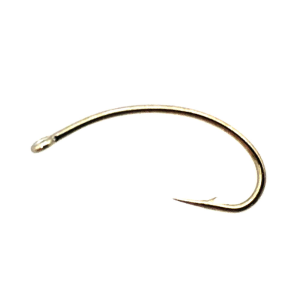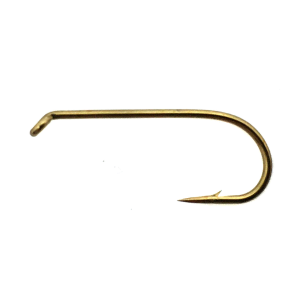

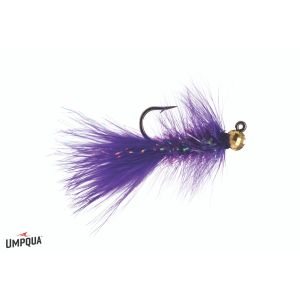
The Umpqua Crystal Bugger Tungsten Jigged in Purple, Size 6, offers a larger profile that effectively imitates bigger aquatic prey, making it ideal for targeting sizable trout, bass, and other predators. Its substantial size, combined with the tungsten...
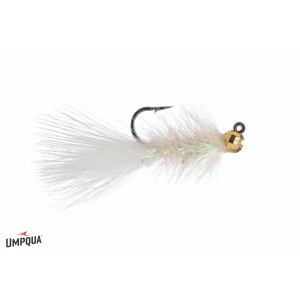
The Umpqua Crystal Bugger Tungsten Jigged in White, Size 6, offers a larger profile that effectively imitates bigger aquatic prey, making it ideal for targeting sizable trout, bass, and other predators. Its substantial size, combined with the tungsten...
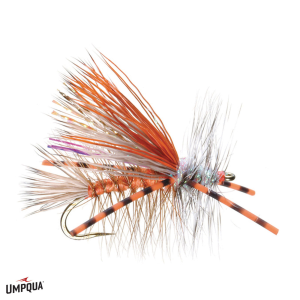
The Size 10 variant offers a larger profile, effectively imitating bigger adult insects. Its substantial size, combined with the vibrant royal coloration and added flash, ensures it stands out in various water conditions. The rubber legs and high-floating...
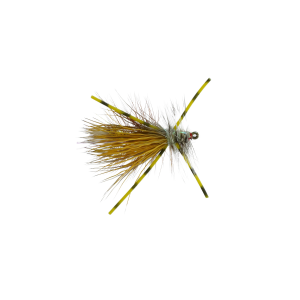
The Size 16 Yellow Crystal Stimulator Rubber Legs Kaufmann's is a smaller dry fly pattern that excels in imitating smaller adult stoneflies and caddisflies. Its bright yellow body, combined with crystal dubbing and subtle rubber legs, provides a delicate...
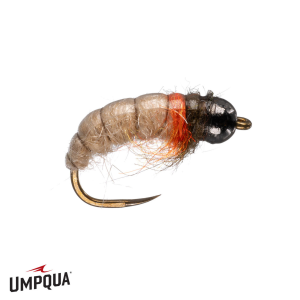
The Size 10 variant of the CZ Caddis is tailored for situations requiring a larger profile to match bigger caddis larvae or to stand out in turbulent waters. Its substantial size, combined with the heavy tungsten bead, ensures it sinks rapidly, making...
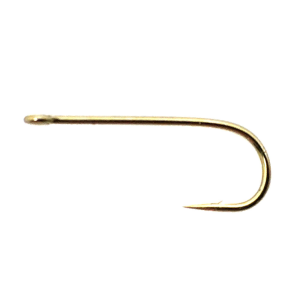
This hook was designed by Jim Lepage and the Orvis Co. and patented as the "oeBig Eye" hook in 1990. This hook features an oversized eye to facilitate easy threading of tippet material, and has the dimensions of a modern dry fly hook, including a slightly...
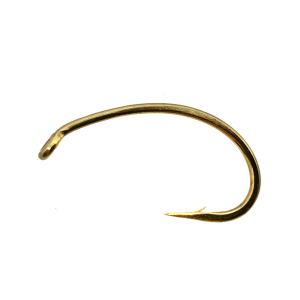
This heavy wire version of style 1130 was introduced in 1999 as a response to feedback received from flyfishers who need tougher hooks for heavy powerful fish, like steelhead, and those who want heavier wire to aid the sinking speed of their subsurface...
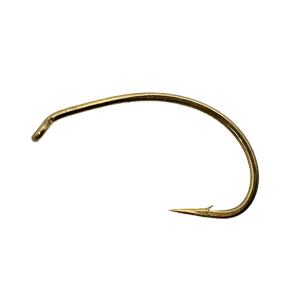
Tiemco introduced continuous bend hooks into the American fly tying market in the 1980's. This particular style is similar to the TMC 2487, which quickly became popularly known as a "oeScud Hook" because of its shape, which is similar to the curve of...
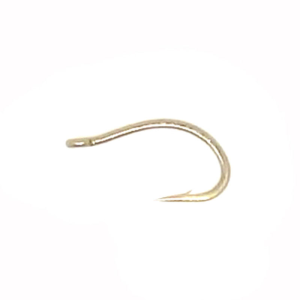
Daiichi introduced this up-eye version of the scud hook in 1990. By incorporating an up-eye, this design gives the hook a larger "oebite". In other words, a down-eye would significantly restrict the hooking ability of this hook by closing off the gape.
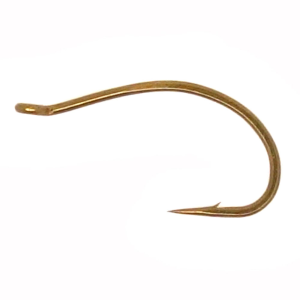
This hook design is similar to hooks used in England and Europe as bait hooks for carp. In fly-fishing, it works great for nymphs, larvae, scuds, shrimp, or bead-head flies. The heavier than standard wire is preferred by some to give flies more weight...
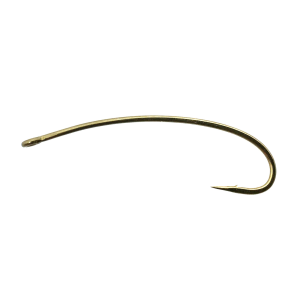
The york bend was developed by Daiichi to simulate a more natural looking curved hook. Many tiers feel that these curved hooks impart amore life like natural appearance in the flies they create. This 3X-long model is perfect for bead head nymphs, hoppers,...
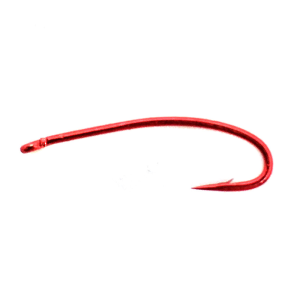
The york bend was developed by Daiichi to simulate a more natural looking curved hook. Many tiers feel that these curved hooks impart amore life like natural appearance in the flies they create. This 3X-long model is perfect for bead head nymphs, hoppers,...
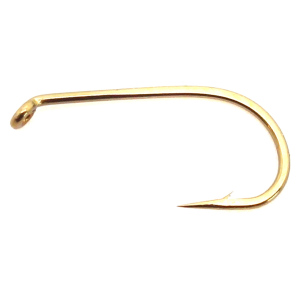
A "oeshort shank" hook is an interesting tool for a tier. If you tie a standard length pattern on a short shank hook, you select one size larger than normal - a size 12 Adams fits on a size 10 "oeshort shank". This does two things that may be beneficial....
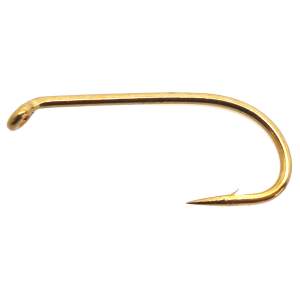
In the early days of fly tying and fly-fishing, "oewet flies" were king. Dry flies and nymphs today are more popular, but wet flies, which are fished subsurface, are still very successful for catching trout, steelhead, and salmon. Wet flies do not closely...
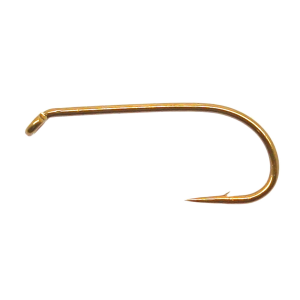
This is the traditional "oewet fly" hook. Wet flies are time honored, successful, subsurface patterns. (see 1530) These hooks feature a more gradual curve of the wire in the transition from the straight shank to the bottom of the bend. This shape is associated...

1X-long hooks are about "oeone eye length" longer than standard shank length. They are used for slightly longer wet flies, which give them a "oetruer to nature" dimension, considering that wet flies represent mayflies, which are long bodied insects. They...
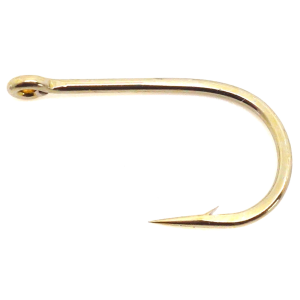
The Daiichi 1640 fly fishing hook has a round bend, straight eye, 2X short shank, mini barb; Uses: tube flies, spiders, ants, egg flies, extended body dry flies.
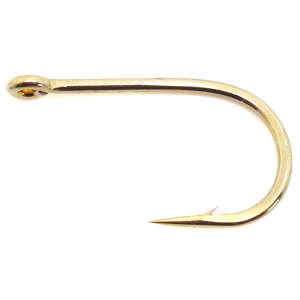
The 1650 Tube Fly Hook has the same shape as the 1640. This hook features 2X-heavy wire which makes it great for large trout, steelhead and salmon tube flies. 1650 has 2X-heavy wire.
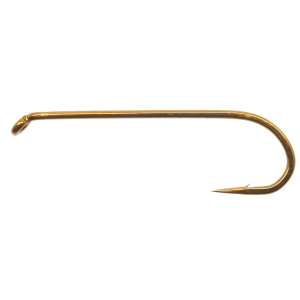
Heavy wire, 2X-long hooks are today the most popular models used for tying flies imitating nymphs (The larvae of mayflies, caddis flies, and stoneflies). They also are popular for grasshopper patterns.

This hook was specifically designed to enhance the "oenatural appearance" of stonefly nymph fly patterns. In older fly tying recipes, tiers were often instructed to bend the hook shank of a typical 3X or 4X-long hook down, that way the final product exhibits...
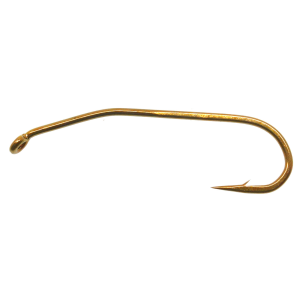
This hook was specifically designed to enhance the "oenatural appearance" of stonefly nymph fly patterns. In older fly tying recipes, tiers were often instructed to bend the hook shank of a typical 3X or 4X-long hook down, that way the final product exhibits...
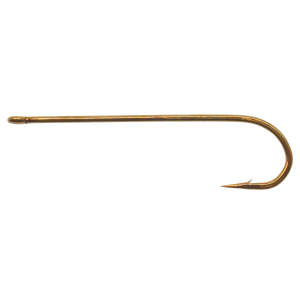
This hook is a variation of the standard (4X) streamer, because it features a straight eye (or ringed eye). Some anglers prefer this variation to the popular down-eye model. Keith Fulsher advocated the straight eye streamer hook in his book "oeFishing...
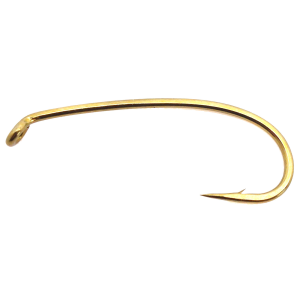
Daiichi Curved Nymph Hook. Uses: Flies for steelhead, salmon and large trout.